
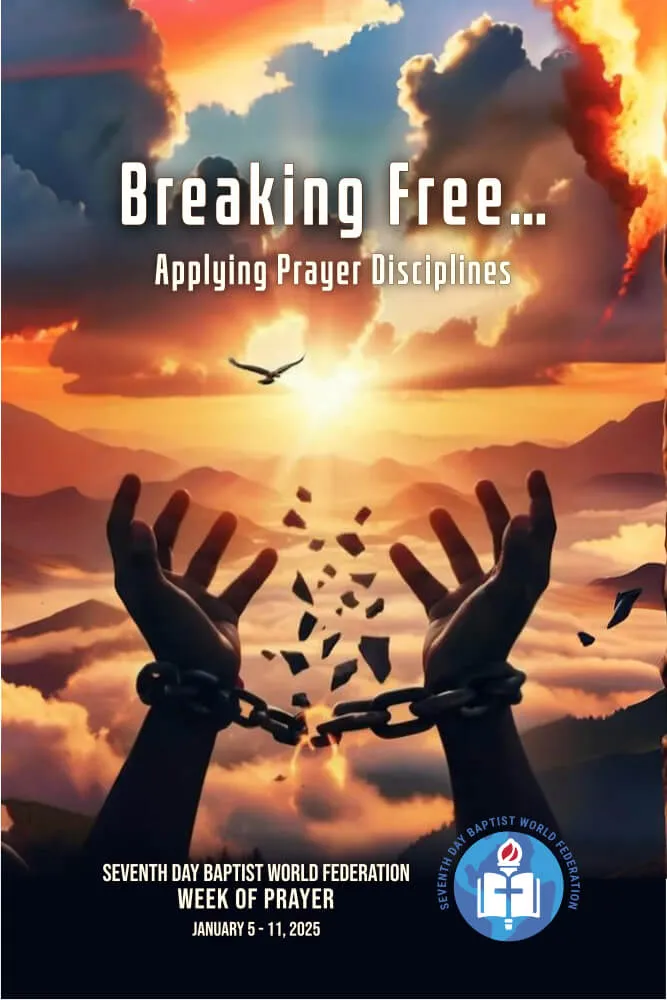
During the first full week of January since 1967, Seventh Day Baptists around the world have come together in prayer, sharing theme-focused meditations chosen by the author of the Seventh Day Baptist Week of Prayer booklet. The theme for this year is, “Breaking Free… Applying Prayer Disciplines.”
Download the Portuguese version
We are encouraging prayers each day of the week for all countries of the world where Seventh Day Baptists exist; not just the countries which are members of the World Federation. To help the people in our conferences pray intelligently about concerns in particular countries, a page with relevant information by country has been posted.
Overview
The word of God, both in the Old and New Testaments, is replete with instances of prayer. Some are detailed and expressive, while others are simple and to the point. In all cases, all the evidence in scripture reveals that God generally responds favorably to genuine, sincere prayers. But, admittedly, even from my own experience—and I am sure others can say the same—praying can be a daunting undertaking, especially when situations are urgent and overwhelming. Audrey Hogg, in her book, If My People Pray…A Global Call to Prayer, quoted comments from Myles Munroe indicating that prayer can be the “source of great faith or frustration.” Consequently, how we treat prayer will determine its faith or frustration effect. Sometimes prayer is not the first response to a situation. A response to situations can sometimes involve giving thought to praying. The scripture gives clear guidelines and principles which reveal without a doubt that praying to God must always be a priority. This priority engenders spiritual discipline resulting in humility, an obedient heart and genuine reliance on God. The Lord, in 2 Chronicles 7:14, reminded Solomon, “If my people who are called by my name humble themselves, and pray and seek my face and turn from their wicked ways, then I will hear from heaven and will forgive their sin and heal their land.” This response from God, following Solomon’s intense praying in the previous chapter, as he dedicated the new temple, was definitive. In his prayer he stated his reliance on God’s mercy, forgiveness, and covenant promises; but God was precise, concise and direct in His response and outlined His requirements and standards.
God clearly emphasized the discipline of praying as being significant. God is both principled and disciplined in character. When interacting with Him, we are required to maintain relatable discipline when praying. Discipline doesn’t mean rigidity and inflexibility, but order and consistency. So, as we approach God in prayer, He assesses the discipline of fervency and expectancy, which determines how much we really need Him. God likes it when we speak to Him openly with a cooperative disposition. There is also the discipline of resilience and adaptability, the ability to endure and overcome without losing spiritual focus. Of equal importance is praying with patience and self-control, which are valuable components of the Spirit. As we pray, we must be selfless and purposely in the pursuit of God's will, avoiding self-centeredness and pride. As we avoid these subtle pitfalls, strictly focused prayer and having God at the forefront, are necessary disciplines. The uncompromising discipline of rejoicing, praying without ceasing, and being thankful should always be maintained.
Praying can be daunting; but, when utilized with the right spiritual discipline, there are great rewards. This Week of Prayer explores some of these disciplines. Let’s pray for a miraculous breakthrough. I am grateful for and humbled by this opportunity to author this year’s prayer sessions. As we participate, let us Break Free by applying the disciplines.
2 Chronicles 7:14
14 if my people, who are called by my name, shall humble themselves, and pray, and seek my face, and turn from their wicked ways; then will I hear from heaven, and will forgive their sin, and will heal their land.